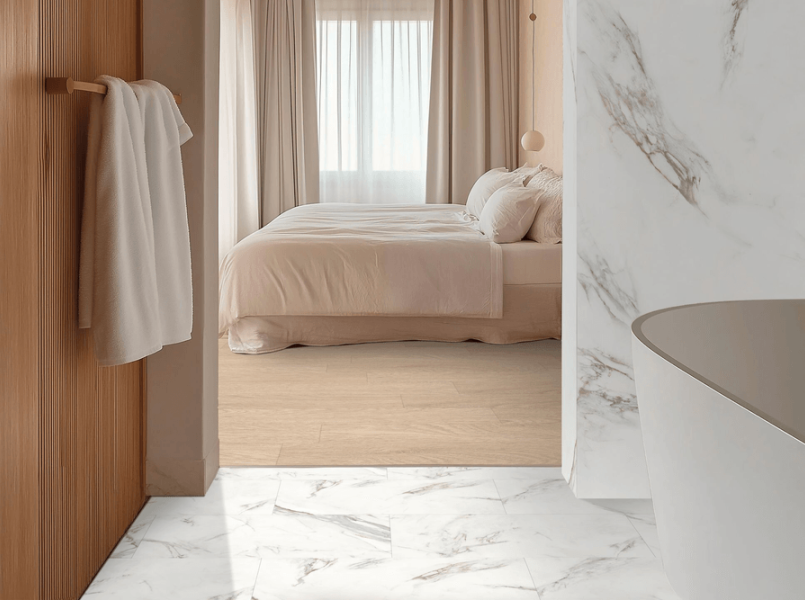
Cohesive Interiors in Housing using Flooring & Decorative Wall Coverings
Across the UK and wider European housing sector, evolving market dynamics are reshaping how residential interiors are specified. Build-to-rent (BtR), later living, affordable housing and high-density urban developments are all driving demand for interiors that combine durability, lifecycle value and operational efficiency with a clear, cohesive architectural language.
Rising construction costs, increased focus on whole-life performance, and tenant expectations for high-quality, well-designed living environments are placing greater emphasis on specification strategies that deliver both functional resilience and consistent visual identity. As a result, the integration of flooring and decorative wall finishes has become a critical component in delivering residential schemes that are robust, scalable and aligned with contemporary design principles.
Achieving cohesive interiors is therefore no longer purely aesthetic. It forms part of a broader, performance-led design approach that supports asset longevity, reduces maintenance complexity and enhances occupant experience across a wide range of housing typologies.
The Role of Flooring in Creating Flow
Flooring is fundamental to establishing spatial continuity within residential interiors. As the primary horizontal surface, it defines movement, delineates zones and underpins the overall material palette.
Current housing trends, particularly the prevalence of open-plan living and flexible layouts favour reduced material transitions and a more seamless approach to floor finishes. Continuous or coordinated flooring across living, dining and kitchen areas can enhance perceived space, improve flow and contribute to a calmer, more legible interior environment.
At the same time, subtle modulation through tone, texture or format enables zoning without reliance on abrupt changes in material. For example, variations within a single product family or complementary finishes can differentiate functional areas while maintaining overall cohesion.
From a specification perspective, rationalising flooring types across a dwelling or development also delivers practical advantages. Reduced product variation simplifies installation, lowers stock requirements for maintenance and ensures consistency in performance characteristics such as slip resistance, durability and cleaning regimes.
In high-density housing, where turnover and wear can be significant, these efficiencies are particularly valuable.
Designing Room-to-Room Consistency
Achieving cohesive interiors requires a holistic approach to specification, balancing the distinct functional demands of each space with the overarching design strategy.
Living Areas and Bedrooms
These spaces prioritise comfort, acoustics and visual continuity. Flooring solutions should provide durability for daily use while supporting a consistent aesthetic across adjoining areas. Increasingly, designers are specifying resilient flooring with acoustic backing or soft surface alternatives to enhance occupant comfort in high-density developments.
Kitchens
Kitchens demand surfaces that can withstand intensive use, frequent cleaning and exposure to moisture and spillages. The trend towards integrated living spaces means kitchen flooring must align visually with surrounding areas while delivering enhanced resistance to wear and staining.
Bathrooms and Wet Areas
Wet environments require a performance-led specification approach, with emphasis on slip resistance, waterproofing and hygiene. Coordinated floor and wall systems are increasingly specified to ensure both technical compliance and visual consistency, particularly in prefabricated or modular bathroom pods.
Circulation Spaces
Hallways and entrance zones experience concentrated footfall and impact. Durable flooring combined with protective wall finishes can mitigate wear and reduce ongoing maintenance. These spaces also set the visual tone for the dwelling, reinforcing the importance of consistent material selection.
Long-Term Benefits for Housing Providers
For housing providers, investors and developers, cohesive specification strategies offer measurable benefits. As the sector continues to professionalise, particularly within BtR and institutional investment models, there is growing focus on operational efficiency, asset performance and tenant satisfaction.
Standardised, high-quality finishes support efficient procurement, reduce maintenance variability and enable more predictable lifecycle planning. Durable materials minimise replacement frequency, while consistent specifications streamline repairs and refurbishments across multiple units.
In addition, well-designed, cohesive interiors contribute to market competitiveness, supporting tenant retention and enhancing perceived value, key considerations in an increasingly competitive rental landscape.
Conclusion
The creation of cohesive residential interiors is intrinsically linked to the broader evolution of the housing market. As demands for quality, performance and efficiency continue to rise, specification strategies must respond accordingly.
Through the considered integration of flooring and decorative wall panels, it is possible to deliver interiors that are visually unified, technically robust and operationally efficient. This approach supports not only immediate design objectives but also long-term asset performance and occupant wellbeing.
By aligning material selection with both architectural intent and functional requirements, housing providers can create environments that remain adaptable, durable and relevant over time.
At home with Gerflor
International flooring specialist Gerflor provides a comprehensive portfolio of flooring and interior solutions tailored to the housing sector. Designed to meet the demands of modern residential environments, these solutions support durability, safety, comfort and long-term performance across a wide range of applications.
Learn more about Gerflor housing solutions, request a free sample or speak to a specialist today by calling 01625 428 922, emailing contractuk@gerflor.com or visiting gerflor.co.uk.